 By admin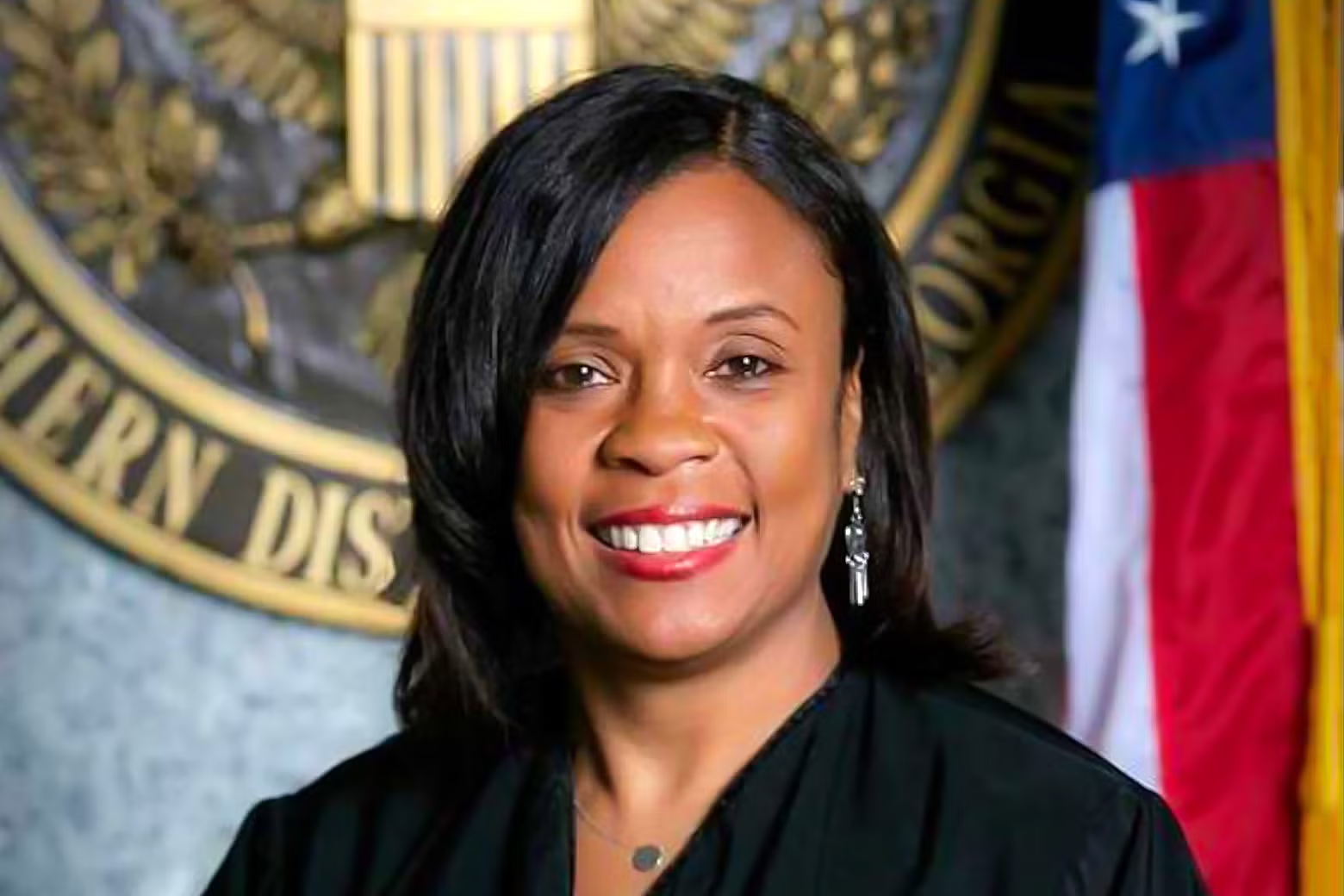
Judges who interpret our laws should be held to the highest ethical standards. But right now, they’re held to none.
Read more One of the Supreme Court’s Worst Decisions Is About to Turn 50. It’s Past Time to Reverse It.
Georgia federal Judge Eleanor Ross received a “” for having sex with a law enforcement officer in chambers over a two-year period, in earshot of clerks, and lying about it. The facts are salacious; the , egregious. But more important are the larger issues this illustrates—an outrageous lack of transparency and accountability in the courts; the judiciary’s inability or unwillingness to “self-police”; and Congress’ refusal to conduct oversight, pass legislation, or cut judiciary funding to check a lawless co-equal branch. Life-tenured judges hold positions of public trust, yet they’re never held accountable for consuming taxpayer dollars while violating that trust.
In September 2025, after a law clerk misconduct to the chief district court judge, Ross initially lied about it. When confronted with the allegations, she denied them and blamed her law clerk, claiming the clerk made it up in retaliation for a poor performance review. She later recanted. After a forensic investigation and interviews with six clerks, the 11th Circuit Judicial Council issued a toothless : Judge Ross was initially shielded from accountability, her identity shielded from public scrutiny.
Ross’ troubling lack of candor—something she disciplines witnesses for in her courtroom—is particularly threatening to judicial integrity and disqualifying for judicial service. Why should litigants and witnesses tell the truth if the judge cannot even tell the truth? Ross has been entrusted to judge others’ veracity, yet her own candor is in question.
As usual, the toothless punishment did not fit the crime: Ross apologized to clerks and agreed not to serve as chief judge or on a judicial council. The judiciary opted not to discipline Ross more harshly due to “exemplary” judicial service and her unlikeliness to engage in further misconduct. This exemplary service failed to account for her disturbingly poor judgment, risking blackmail and conflict-of-interest allegations, since the Atlanta Police Department appears before her court; nor her lack of candor to the court. It’s doubtful that Ross or any judge would exhibit such leniency from the bench when confronted with litigants’ similar misconduct.
Punishment is a deterrent. When judges like Joshua Kindred, Kesha Tanabe, Sarah Merriam, Mark Wolf, Lydia Kay Griggsby, and now Eleanor Ross are never held meaningfully accountable—never truly disciplined for conduct that would be illegal in other workplaces—they have no incentive not to misbehave. They may even feel emboldened to misbehave again. This lack of meaningful discipline is why judicial misconduct persists, unabated, in the federal courts.
Litigants before Judge Ross should question her impartiality and judgment. We’re already seeing this: the Justice Department filed a motion to disqualify Ross from an election case, evidence that judicial misconduct has far-reaching implications. It’s reminiscent of former Alaska federal judge Joshua Kindred’s 2024 resignation: Following revelations of conflicts of interest with the U.S. Attorney’s Office, hundreds of cases were reopened, creating chaos and resource allocation issues, and threatening judicial integrity.
This is the fourth publicly reported judicial misconduct matter this year, and likely won’t be the last. But if past is prologue, the courts won’t willingly implement reform. Judicial misconduct is not rare, it just rarely comes to light. In fact, the federal judiciary’s own showed 1 in 17 federal judges are abusive. Yet in 2023, under the Judicial Conduct and Disability Act. That’s because subordinates rarely blow the whistle on their powerful bosses, because they’re not legally protected against retaliation for reporting: The judicial branch’s more than 30,000 employees nationwide are inexplicably exempt from Title VII of the Civil Rights Act and all federal anti-discrimination, whistleblower, civil rights, and labor laws.
Read more The Catholic Church Fired an In-House Exorcist for Saying UFOs Are Actually Demons. I Can Explain.
Judge Ross should resign. Otherwise, Congress should impeach her. Ross’ integrity, candor, and judgment are suspect.
Congressional Democrats weighing action against a judge appointed by a Democratic president should consider this: Constituents are appalled that abusive judges each consume approximately $250,000 annually in taxpayer dollars and are immune from suit, while committing misconduct—the type of corruption Democrats claim interest in rooting out throughout the federal government. But it’s easier to call out the other side’s misconduct than to hold their own accountable. Senate Judiciary Democrats, too, deserve blame for failing to properly vet judicial appointees: The Judiciary Committee’s asks no questions about workplace conduct, nor are questions asked of nominees’ employees during vetting about management practices.
This problem is much bigger than Judge Ross. Congress must check the lawless judiciary, while this issue is top of mind, through legislation, rigorous oversight, and appropriations, since the courts cannot self-police.
Congress should pass the Judiciary Accountability Act and extend federal anti-discrimination protections to judicial employees, so judges are no longer immune from suit, and employees can blow the whistle without fear of retaliation. The JAA also mandates annual climate surveys: Quantifying the scope of these problems is the first step toward crafting effective solutions.
The House Appropriations Committee has further failed to tie the judiciary’s annual budget request to meaningful benchmarks for reform, like conducting annual climate surveys, implementing meaningful guardrails and remedies, and hosting mandatory workplace training for judges and clerks, as conditions of federal funding. Administrative Office of the U.S. Courts Director Robert Conrad will testify before an appropriations subcommittee this summer; members should question him about workplace conduct. Last year, they did not, even though workplace conduct featured prominently in his .
Like any insular organization—police unions, the military—the judiciary won’t raise its standards without outside oversight. Judges won’t always act ethically without legal constraints. That’s why the laws that apply to the rest of us should apply to judges, and those who interpret our laws should be subject to those same laws.
Right now, corruption and accountability are particularly salient for both voters and lawmakers. Yet while members of Congress demand accountability across the federal government, they’ve given a free pass to the most unaccountable government actors—judges. Workplace misconduct is a blind spot for the courts. Judge Ross is the latest in a long line of examples of the most hypocritical double standard: Judges hold others accountable for misconduct but are never held accountable themselves. Failing to act now sends a disturbing message: Accountability is optional for the powerful.
Read more Will Graham Platner Make It to November?