 By admin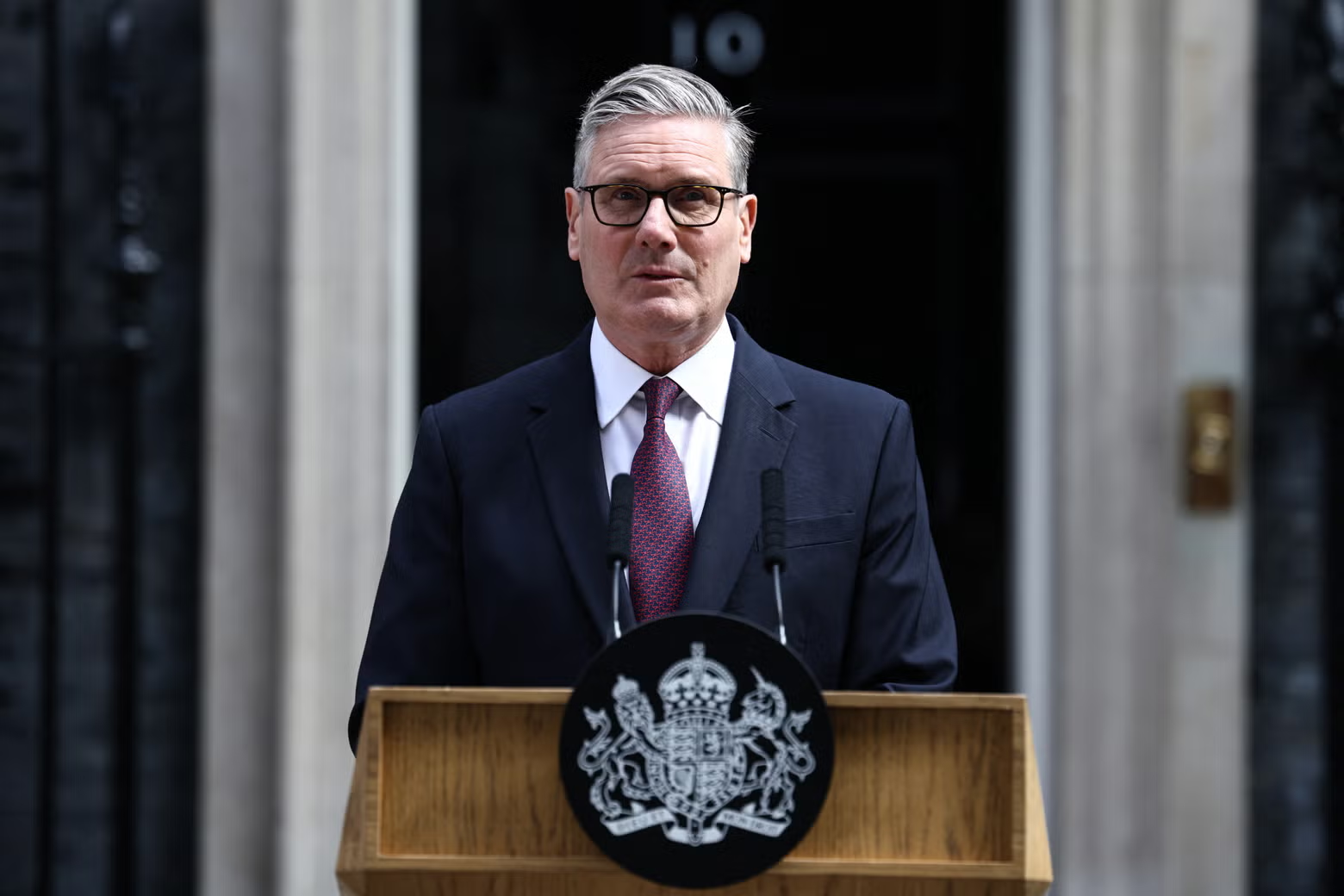
We’ve had so many prime ministers here in the U.K. in recent years that I have to count them off on my hands to make sure I’m not forgetting anybody, and I’m running out of fingers. Keir Starmer, who took the post two years ago, ending 14 years of Tory rule, announced his resignation on Monday, almost 10 years to the day that Britain voted to leave the European Union. He was our sixth PM in a decade.
Read more Trump’s Latest Court Loss Is a Doozy
It’s not surprising that Starmer has gone, but it is surprising that he only lasted two years. His election was supposed to mark the end of the revolving door at the top of government. Alas, it seems this is just how we do politics here now.
The reason he’s going has to do with a by-election in a suburban area of Wigan called Makerfield. Andy Burnham, the mayor of Greater Manchester for the past nine years, until recently, has been making noises for a while about wanting to take over leadership of the Labour Party. He’s run twice for Labour Party leadership, once in 2010, where he came fourth out of five candidates, and again in 2015, when he lost to Jeremy Corbyn. To make a bid for party leadership, he needed to become a member of Parliament, and so he ran in Makerfield. Burham won the Makerfield by-election on Thursday by 55 percent, which is important because it means he beat not only Reform UK but also the entire right-wing vote combined, in an area where the demographics skew older, whiter, and not in white-collar jobs. The by-election was a petri dish that Labour had been watching closely, because if Burnham could beat Reform on that stage, it might signal that he could beat Reform in a general election. The number of MPs who had pledged their support for Burham’s leadership had neared 300 by the time Starmer said he would step down.
Reform UK, for those of you who are unfamiliar—and how I envy you if that is so—is our burgeoning homegrown MAGA-type thugs, led by toady pintman Nigel Farage. Google “Reform MP crimes” if you’d like a fuller picture of the kind of people we’re dealing with here. They are doing alarmingly well in polling, and Labour is doing alarmingly badly.
Starmer has not proved a popular PM, and Burnham is better liked. He’s more charismatic than Starmer, that much is undeniable, with a kind of boyish charm, and he can do “normal bloke” better than Starmer can. He’s enjoyed a good reputation as Manchester’s mayor, and many here remember his full-throated attacks on Boris Johnson during the pandemic. As recently as Friday, Starmer was saying he was going to stay on as prime minister and fight Burnham, but Burham’s win prompted ministers to tell Starmer that if he didn’t resign by Monday, a slew of them would jump ship on Tuesday.
What the hell happened with Starmer? He’s not done anything specific to occasion his needing to step down. He didn’t get brought down by a scandal, like Boris Johnson after his lockdown parties, or get chased out of town for tanking the country’s economy, like Liz Truss. But Starmer not doing anything has sort of been the problem all along. When he came in two years ago, there was a general sense of relief. Not excitement, quite, but a muted kind of exhaling, because at least we had finally managed to shake off the Tories. Starmer was a former human rights lawyer who became a politician in 2015, and had an air of professional respectability about him that seemed like a refreshing change from the corruption and nasty populism that the Tories had been offering. But while Starmer had a majority when he was elected, it became known as the “loveless landslide.” He won decisively not because people wanted Labour, or Starmer, in particular, they just really, really didn’t want the Tories.
Read more The Supreme Court Quietly Embraced Clarence Thomas’ Theory of Race. It’s Already a Disaster.
Starmer has done some good work. He’s brought us closer to the EU again, raised taxes to fund schools, moved back toward nationalizing the railways, and brought about improved rights for the U.K.’s enormous numbers of people who rent their housing. But by and large, he’s been a huge disappointment. He thoroughly, thoroughly alienated the left, not least through his shameful refusal to condemn Israel’s actions in Gaza and failure to stand up for the rights of trans people. He also failed to lure any of the right over to Labour’s causes, even though he was obviously straining to do so in order to compete with Reform. A tough speech on immigration in which Starmer said that Britain was becoming “an island of strangers” was a particularly low moment. It invited comparisons with Enoch Powell’s infamous “rivers of blood” speech, and went down so badly that he had to publicly denounce his own words some time later. You can’t beat the rabid raving racist party at rabid raving racism, and he was a fool to try.
Voters didn’t think he had much vision or a coherent outlook back when he was elected, and so it has proved: His premiership has been characterized by an appearance of not having any clear goals for what kind of government he wanted, and not really sticking to any guns convincingly. That’s part of what grated for many about watching Starmer fail to indict Israel: knowing that, as a onetime human rights lawyer, he could see full well what was happening in Gaza and was choosing, for reasons of greasing wheels with Trump and with Israel, to lie about it. He seemed like someone who would say whatever was required of him at the moment in hand, and to say it without a light behind his eyes. Because in addition to being ineffectual and incoherent, he was also uncharismatic with it. Blandness was his defining attribute, and how could the public feel supportive of someone they didn’t feel they knew?
Starmer was close to tears when he made his resignation speech outside Downing Street on Monday, announcing that after he steps down he will focus on the most important things, “being the best husband I can” and “being the best dad I can to my beautiful children, who are my pride and my joy.” Finally, some emotion, some human warmth, but too little, too late.
And so, on we go, barrelling toward the next general election, which must take place by 2029 but will likely be sooner. Andy Burnham will almost certainly be leading Labour into it as the incumbent prime minister. Other MPs may run for the Labour leadership now, but Burnham looks likely to be PM by mid-July if he runs unopposed, as is expected.
Burnham has a daunting task ahead of him. He needs to coax back voters on the left, who have absconded to the Green Party in large numbers, and the right, who are being wooed by Reform, to stop Farage from taking power at the next general election. Can he do it? He seems to have a better shot than Starmer, but that’s not saying much. I fear Labour are still doomed to lose to Reform, but I hope I’m wrong. We don’t need our own Trump. We have enough trouble dealing with yours.
Read more Rebuilding Community and Restoring Meaning in America